Introduction
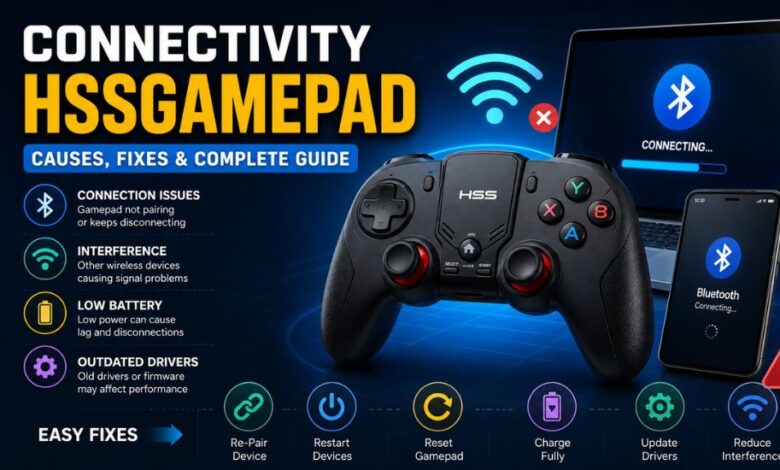
The HSSGamepad is a popular wireless gaming controller used for mobile devices, PCs, and sometimes smart TVs. It is known for its smooth gameplay experience, responsive controls, and comfortable design. However, many users face a common issue known as “Connectivity HSSGamepad problems”, where the controller fails to connect, disconnects randomly, or shows lag during gameplay.
These issues can be frustrating, especially during competitive gaming sessions. The good news is that most connectivity problems are not hardware failures—they are usually caused by Bluetooth settings, software conflicts, or simple configuration errors.
In this detailed guide, we will break down all major causes of HSSGamepad connectivity issues and provide step-by-step solutions that actually work in real-world scenarios.
What is Connectivity HSSGamepad Issue?
“Connectivity HSSGamepad” refers to any problem related to pairing, maintaining connection, or stable communication between the gamepad and the device (Android, PC, or other supported platforms).
Common symptoms include:
- Gamepad not showing in Bluetooth list
- Pairing fails repeatedly
- Controller connects but does not respond
- Random disconnections during gameplay
- Input delay or lag
- Buttons stop working mid-game
These issues are widely reported among users of wireless controllers and are usually fixable without replacing the device.
Main Causes of Connectivity Issues in HSSGamepad
Understanding the root cause is the first step to fixing the problem permanently.
1. Bluetooth Interference
One of the biggest reasons for connectivity issues is interference from other wireless devices.
Why it happens:
- WiFi routers using 2.4GHz frequency
- Nearby Bluetooth devices (headphones, speakers, smartwatches)
- Crowded wireless environment
Result:
- Weak signal strength
- Random disconnections
- Pairing instability
2. Low Battery or Power Issues
A weak battery directly affects the controller’s Bluetooth signal strength.
Symptoms:
- Sudden disconnects
- Laggy response
- Device turning off during gameplay
When the battery level drops, the gamepad prioritizes power saving over stable connectivity.
3. Outdated Firmware or Drivers
Firmware is the internal software of the controller. If it is outdated, it may not properly communicate with modern devices.
Common problems:
- Controller not detected
- Input delay
- Compatibility issues with new Android/Windows updates
4. Incorrect Pairing or Bluetooth Cache Issues
Sometimes the device stores corrupted pairing data.
This leads to:
- Controller not reconnecting
- Multiple failed pairing attempts
- Device confusion between old and new connections
5. Device Compatibility Problems
Not all devices handle Bluetooth controllers equally.
Issues include:
- Weak Bluetooth chip in older phones or PCs
- Windows driver mismatches
- Game settings blocking controller input
Step-by-Step Solutions for HSSGamepad Connectivity Issues
Now let’s move to practical solutions that fix most problems.
1. Restart Both Devices
This is the simplest but most effective fix.
Steps:
- Turn off the gamepad
- Restart your phone or PC
- Turn on Bluetooth again
- Reconnect the controller
👉 This clears temporary glitches instantly.
2. Re-Pair the Gamepad
If the controller is already paired but not working properly:
Steps:
- Go to Bluetooth settings
- Remove “HSSGamepad” from saved devices
- Turn off Bluetooth
- Turn it back on
- Pair again from scratch
3. Reset the Gamepad
Most HSSGamepads have a small reset hole.
Steps:
- Use a pin to press reset button
- Hold for 5–10 seconds
- Reconnect after reset
👉 This clears internal memory conflicts.
4. Charge the Controller Fully
Always ensure:
- Battery is above 80%
- No low-power mode is active
Low power = unstable Bluetooth signal.
5. Update Drivers or Firmware
For PC users:
- Update Bluetooth drivers from Device Manager
- Install latest system updates
For mobile users:
- Update OS version
- Check controller app (if available)
6. Reduce Wireless Interference
Practical tips:
- Stay close to the device (1–3 meters)
- Turn off unused Bluetooth devices
- Avoid using near WiFi router
- Disconnect other controllers/headphones
7. Use USB Cable (If Supported)
If Bluetooth is unstable:
- Switch to wired USB mode
- This removes all connectivity issues instantly
8. Clear Bluetooth Cache (Android Fix)
Steps:
- Go to Settings
- Apps → Bluetooth
- Clear Cache and Data
- Restart device
Advanced Fixes for Persistent Issues
If basic fixes don’t work:
✔ Reset Network Settings
This removes all saved Bluetooth/WiFi configurations.
✔ Test on Another Device
Helps identify whether issue is with controller or device.
✔ Avoid Background Heavy Apps
Games + background apps can cause lag and disconnects.
Prevention Tips for Stable Connection
To avoid future connectivity problems:
- Keep firmware updated
- Charge regularly
- Avoid overcrowded Bluetooth environments
- Reset device occasionally
- Use original charging cable
- Keep controller within range
When You Should Consider Replacement
Only consider replacing the controller if:
- It doesn’t connect to multiple devices
- Reset and firmware updates don’t work
- Hardware damage is visible
- Buttons are physically unresponsive
Otherwise, most issues are fixable.
Final Thoughts
The Connectivity HSSGamepad issue is one of the most common problems faced by gamers using wireless controllers. However, in most cases, it is not a serious hardware fault. It is usually caused by Bluetooth interference, low battery, outdated drivers, or simple pairing errors.
By following the step-by-step fixes mentioned above, you can restore stable performance and enjoy smooth gameplay without interruptions. Proper maintenance and correct setup can significantly improve the long-term performance of your gamepad.
If you follow this guide carefully, you will likely solve 90% of connectivity problems without needing technical support.
For more detailed gaming guides, troubleshooting tutorials, and tech insights, visit Buzz Arena.
Written by James
James is a cybersecurity researcher and technology content writer at BuzzArena with over 5 years of experience covering digital safety, scam awareness, phone number investigations, and online consumer protection. He specializes in creating accurate, well-researched, and easy-to-understand content that helps readers stay informed and secure in today’s digital world.
FAQs – Connectivity HSSGamepad
1. Why does my HSSGamepad keep disconnecting?
This usually happens due to Bluetooth interference, low battery, or outdated firmware. Keeping the controller charged and reducing nearby wireless devices can help.
2. How do I fix HSSGamepad not connecting?
Remove the device from Bluetooth settings, restart both devices, and pair again from scratch. If needed, reset the gamepad using the reset button.
3. Is HSSGamepad compatible with all Android phones?
It works with most Android devices, but older phones with weak Bluetooth versions may face connectivity issues or lag.
4. Why is my HSSGamepad lagging during gameplay?
Lag is often caused by signal interference, low battery, or background apps consuming device resources.
5. How do I reset my HSSGamepad?
Use a pin to press the small reset hole on the controller for 5–10 seconds, then reconnect it via Bluetooth.
6. Can I use HSSGamepad with a PC?
Yes, it can connect via Bluetooth or USB (if supported). Make sure drivers are updated for smooth performance.
7. Why is my gamepad connected but not responding?
This may be due to corrupted Bluetooth cache, incorrect pairing, or compatibility issues with the game or system.
8. How far can I use HSSGamepad from my device?
Optimal range is usually 1–3 meters. Beyond that, connection may become unstable or laggy.
9. Does low battery affect connectivity?
Yes, low battery can weaken Bluetooth signals and cause random disconnections or input delays.
10. What is the best way to avoid connectivity issues?
Keep firmware updated, maintain full charge, avoid interference, and regularly re-pair the device if needed.