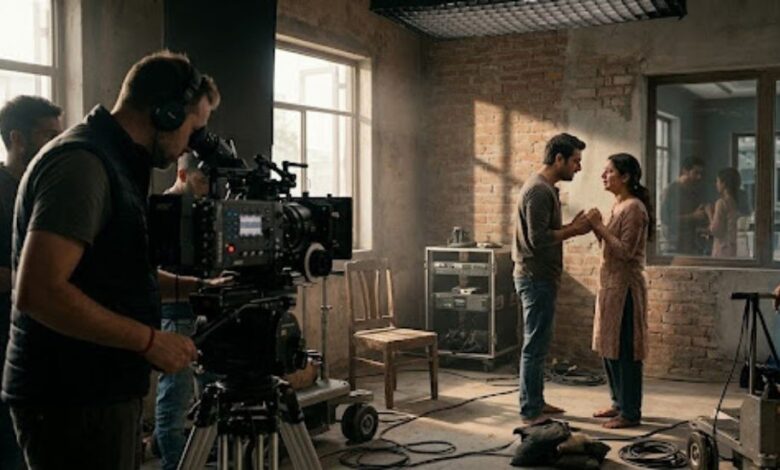
Realism in video has always been tied to detail. Small elements such as lighting, motion, timing, and sound determine whether something feels believable or artificial. In traditional production, achieving that level of realism required coordination between multiple specialists.
That expectation has not changed, but the way it is achieved is evolving.
A new generation of video creation is making it possible to approach realism differently. Instead of layering elements step by step, everything can now be generated together with consistency built in. At the center of this shift is Seedance 2.0, a multimodal model that brings together visual, motion, and audio elements into a unified output.
Realism Begins with Consistency Across Frames
One of the main reasons videos feels believable is consistency. Characters must look the same across scenes. Movements need to follow a natural flow. Lighting should remain aligned with the environment.
Seedance 2.0 approaches this by maintaining character consistency across every scene within a multi-shot sequence. Instead of relying on post-production fixes, continuity is built into the generation itself.
Within Higgsfield, this becomes part of a controlled workflow. Creators can guide how scenes connect while maintaining a stable visual identity throughout the sequence.
This approach represents what many consider Future-forward innovation, where realism is not added later but designed from the beginning.
Audio and Visual Alignment as a Single Process
Realism is not only visual. Sound plays an equally important role in how content is perceived. Dialogue must match lip movement. Ambient sounds should reflect the environment. Music needs to align with pacing.
Seedance 2.0 generates audio and video together in a single pass. Dialogue is synchronized with lip movement, while soundscapes and music are created in alignment with the visuals.
Higgsfield supports this by giving creators the ability to guide timing and structure. Instead of adjusting audio after the fact, creators receive a result where everything feels naturally connected.
This reduces the need for manual alignment and creates a more cohesive viewing experience.
Cinematic Detail Without Technical Complexity
Cinematic realism depends on elements such as camera movement, lighting, and depth. These details influence how a scene is perceived, even when viewers are not consciously aware of them.
Seedance 2.0 introduces control over these elements in a way that does not require advanced technical knowledge. Creators can guide camera angles, lighting conditions, and motion while the system handles execution.
Higgsfield provides the environment where these adjustments can be applied effectively. Advanced users can refine transitions and timing, while others can still achieve strong results without prior experience.
For those interested in how visual composition enhances realism, this guide on cinematography definition explains how lighting and camera work shape perception.
Multi-Shot Narratives That Feel Continuous
Realistic video often depends on how scenes connect. Abrupt transitions or inconsistencies can break immersion.
Seedance 2.0 supports multi-shot narratives where each shot flows naturally into the next. With clips up to 15 seconds per shot, creators can build longer sequences while maintaining continuity.
Higgsfield allows these sequences to be refined and extended, making it easier to develop a complete narrative. Instead of focusing on editing transitions, creators can focus on guiding the story.
This changes how realism is achieved. Continuity becomes part of the generation rather than something added afterward.
Action and Motion That Reflect Real Physics
Dynamic scenes often reveal the limits of realism. Motion that feels unnatural or disconnected can quickly break immersion.
Seedance 2.0 addresses this by supporting realistic collision physics and slow-motion effects within the generation process. Movement behaves in a way that aligns with physical expectations.
Higgsfield allows creators to guide these sequences while maintaining consistency across scenes. This makes it possible to create action-driven content that feels grounded and believable.
The result is a more immersive experience where motion contributes to realism rather than detracting from it.
From Static Inputs to Lifelike Output
Creating realistic video from static inputs has traditionally required multiple stages. Images needed to be animated, sequences had to be constructed, and audio was layered afterward.
Seedance 2.0 simplifies this by accepting text, images, video, and audio as inputs, up to 12 assets in a single generation. These inputs are combined into a cohesive output that reflects the intended style and narrative.
Higgsfield supports this process by providing a workspace where creators can refine and extend these outputs. This reduces the gap between concept and execution.
For marketers and creators, this means content can be developed more efficiently while maintaining a high level of realism.
Rethinking Realism in Video Creation
Realism is no longer defined only by production scale. It is defined by how well different elements work together.
Seedance 2.0 brings these elements into a single process, allowing creators to focus on direction rather than assembly. Higgsfield enables this by providing a structured environment where these capabilities can be applied effectively.
This changes how realism is approached. Instead of building it step by step, creators can generate it as part of a unified workflow.
Conclusion
The expectations around video realism continue to evolve. Viewers expect content that feels natural, consistent, and immersive.
Seedance 2.0 represents a shift toward meeting those expectations through integration rather than complexity. By combining multimodal inputs, synchronized audio, and multi-shot continuity, it changes how realism is achieved.
Higgsfield brings these capabilities into a practical workflow, allowing creators to shape content with precision and clarity.
The result is a new standard for realism, where every element of a video works together from the moment it is created.